
Earn Your Commercial Pilot Certificate in Dayton
Refine your flying, decision-making, and professionalism for commercial pilot privileges.
Professional Pilot Training
Commercial Pilot Certificate
The Commercial Pilot Certificate is the point where flying becomes a professional privilege. It allows qualified pilots to act as pilot in command for compensation or hire within the privileges, limitations, and operating rules that apply to the flight.
At Dayton Aviation Services, commercial training is focused on precision, consistency, and judgment. You will sharpen aircraft control, strengthen aeronautical knowledge, review commercial privileges and limitations, and prepare to fly to the standards expected on the FAA practical test.
This program is designed for pilots who already have a private pilot foundation and are ready to move toward professional-level flying, whether the next step is instructing, time building, advanced aircraft, or another aviation career path.
- Training Type
FAA Part 61
- Duration ¹
Based on flight time and proficiency
- Cost
Contact us for program pricing
¹ Individual performance may vary based on personal diligence, flying full-time or part-time, aptitude, and weather.
Program Benefits
- Focused preparation for commercial maneuvers, cross-country requirements, knowledge test, and practical test
- Instruction that emphasizes precision, risk management, aircraft performance, and professional decision-making
- Training based at Moraine Airpark with access to Dayton-area airspace, airports, and cross-country routes
Requirements
- Be at least 18 years old
- Be able to read, speak, write, and understand English
- Hold at least a Private Pilot Certificate before applying for the commercial practical test
- Meet FAA aeronautical experience requirements for the aircraft category and class sought
- Receive required instructor endorsements and pass the commercial pilot knowledge and practical tests

Step Into Professional Standards
Commercial Training Is About More Than Total Time
FAA experience requirements matter, but the commercial certificate is not only a logbook milestone. You must show smooth aircraft control, accurate planning, strong judgment, and a clear understanding of commercial pilot privileges and limitations.
If you are approaching the required experience, Dayton Aviation Services can help you evaluate your logbook, identify remaining requirements, and build a focused path toward checkride readiness.
Syllabus Overview
From Private Pilot to Commercial Standards
Commercial training builds on your private and instrument experience by raising the standard for planning, performance, aircraft control, and decision-making. Under Part 61, airplane single-engine applicants must meet specific flight time, PIC, cross-country, training, and solo or performing-PIC requirements before the practical test.
Your instructor will help connect the FAA requirements to a practical training plan, including any remaining experience requirements, knowledge test preparation, maneuver proficiency, and final checkride review.
Phase One
Logbook Review and Knowledge Preparation
The first phase establishes where you stand against the commercial pilot requirements. Your instructor will review your certificate level, flight time, PIC time, cross-country experience, instrument training, night experience, and aircraft-specific training needs.
Ground preparation covers commercial privileges and limitations, regulations, aircraft systems, performance, weather, weight and balance, cross-country planning, and aeronautical decision-making.
- Review of FAA commercial pilot eligibility and aeronautical experience
- Knowledge test preparation and instructor endorsement planning
- Commercial privileges, limitations, and operating rules
- Aircraft performance, systems, weather, and risk management
Phase Two
Experience Building and Required Training
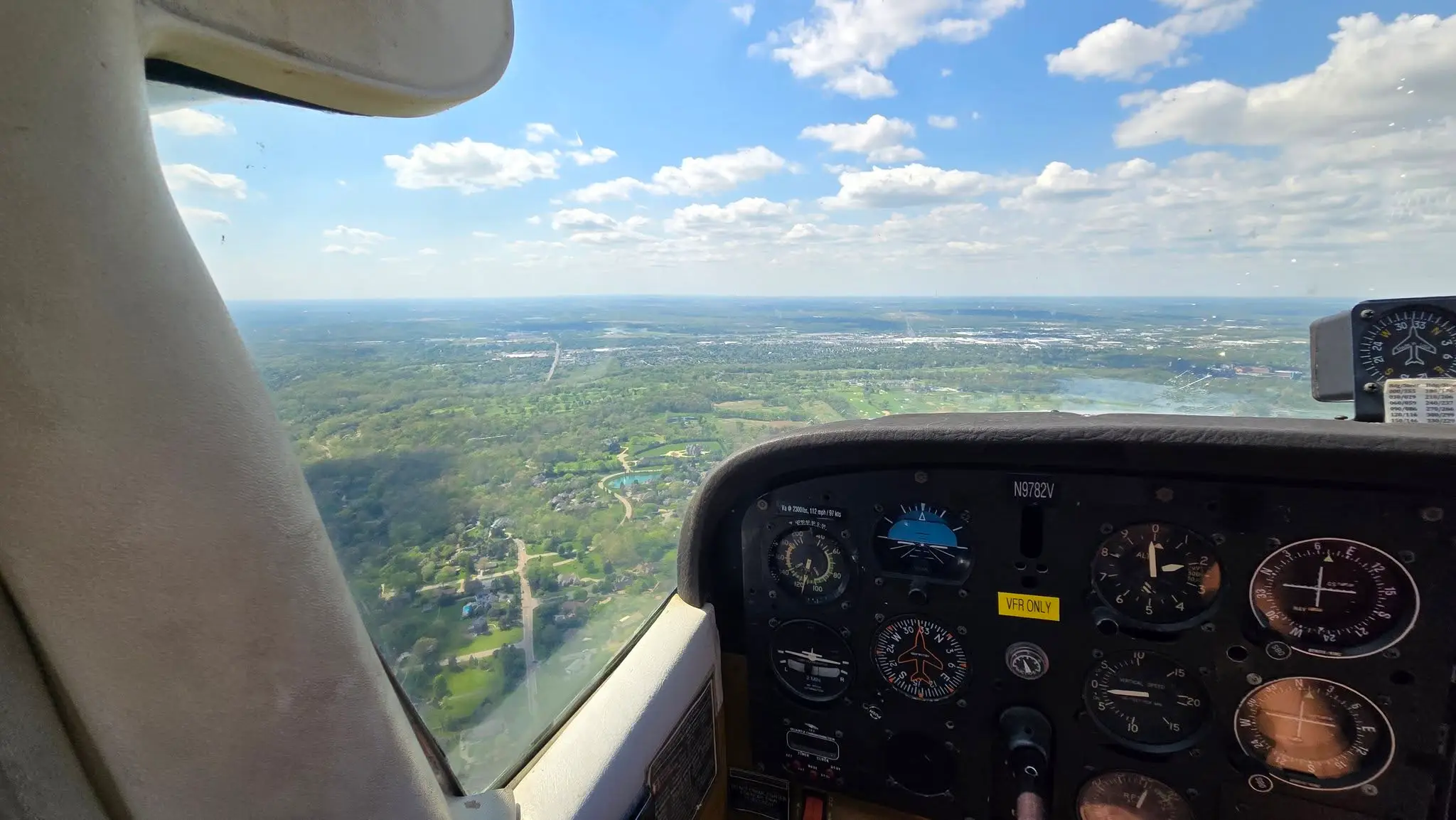
Depending on your logbook, this phase may include remaining commercial experience requirements such as instrument training, day and night cross-country training, technically advanced or appropriate aircraft training, and solo or performing-PIC commercial experience.
The goal is to complete required items while building practical confidence, not simply accumulating hours.
- Commercial cross-country planning and execution
- Day and night training requirements as applicable
- Instrument, TAA, complex, or other required aircraft experience review
- Solo or performing-PIC experience toward commercial requirements

Phase Three
Commercial Maneuvers and Precision Flying
Commercial applicants must demonstrate a higher level of control, planning, and awareness than earlier certificates require. Training focuses on smooth energy management, accurate visual references, stable procedures, and consistent correction of small deviations before they become large ones.
You will practice the required areas of operation for the airplane category and class sought, including performance maneuvers, ground reference maneuvers, takeoffs, landings, navigation, slow flight, stalls, and emergency operations.
- Chandelles, lazy eights, steep turns, and other commercial maneuvers as applicable
- Short-field, soft-field, normal, and accuracy landing work
- Ground reference maneuvers and navigation procedures
- Emergency operations and scenario-based decision-making

Phase Four
Checkride Preparation
The final phase prepares you for the oral and flight portions of the FAA practical test. You will review weak areas, confirm required endorsements and documents, refine commercial maneuvers, and practice scenario-based questions tied to real commercial pilot decisions.
Your instructor will focus on readiness, consistency, and the judgment expected of a pilot exercising commercial privileges.
- FAA Airman Certification Standards review
- Oral exam and scenario preparation
- Maneuver refinement and mock checkride work
- Final endorsement, document, and practical test readiness
You Are Ready for Commercial Pilot Privileges
After successful completion of the FAA practical test, you earn a Commercial Pilot Certificate for the appropriate category and class and may exercise commercial privileges when qualified under the applicable regulations.
For many pilots, this certificate is also the gateway to CFI training, advanced ratings, professional time building, and more specialized aviation opportunities.
Clear Your Doubts
Frequently Asked Questions
Can I train part-time?
Yes. Dayton Aviation supports both full-time and part-time students with flexible scheduling.
Got any more questions? Contact us and we will be happy to answer.
Enroll
Begin Training at Dayton Aviation
Fill out this form and we will get back to you shortly.
Contact Information
Dayton Aviation Services
Location
3800 Clearview Rd, Dayton, OH 45439Phone
(937) 372-2460Hours
Hours may differ on holidays.